

About
I hold and MSc in Sustainable Engineering: Offshore Renewable energy and BSc in Naval Architecture and Marine Engineering.
From the deserts of Gilbert, I was always taught to think of and respect the nature around me. Water was seen as a vital and finite resource, a life giving resource. I pursued marine engineering in hopes to find ways to equitably and sustainably harness energy from water environments and understand more about problems around water resources and engineering.
With this, when the opportunity to study in New Orleans came, I took it. The city is plagued with water-related problems from breaking, outdated pumps fitted to resolve the flooding, land subsidence from the offshore oil industry, and brutalization from the hurricanes that occur in the area. Here I gained experience in technical engineering design and performing political, environmental, social, legal, and economic analysis on projects, specifically renewable energy ones.
Wanting to further my education in renewable energy and sustainability, I headed to Glasgow, UK for my masters. Here I expanded my knowledge on the technical design of all forms of renewable energy and advanced my knowledge on PESTLE (political, economic, social, technical, legal, and environmental) analysis on renewables. This holistic analysis led me to produce a thesis on equitable and sustainable energy for New Orleans, which was a geospatial PESTLE analysis.
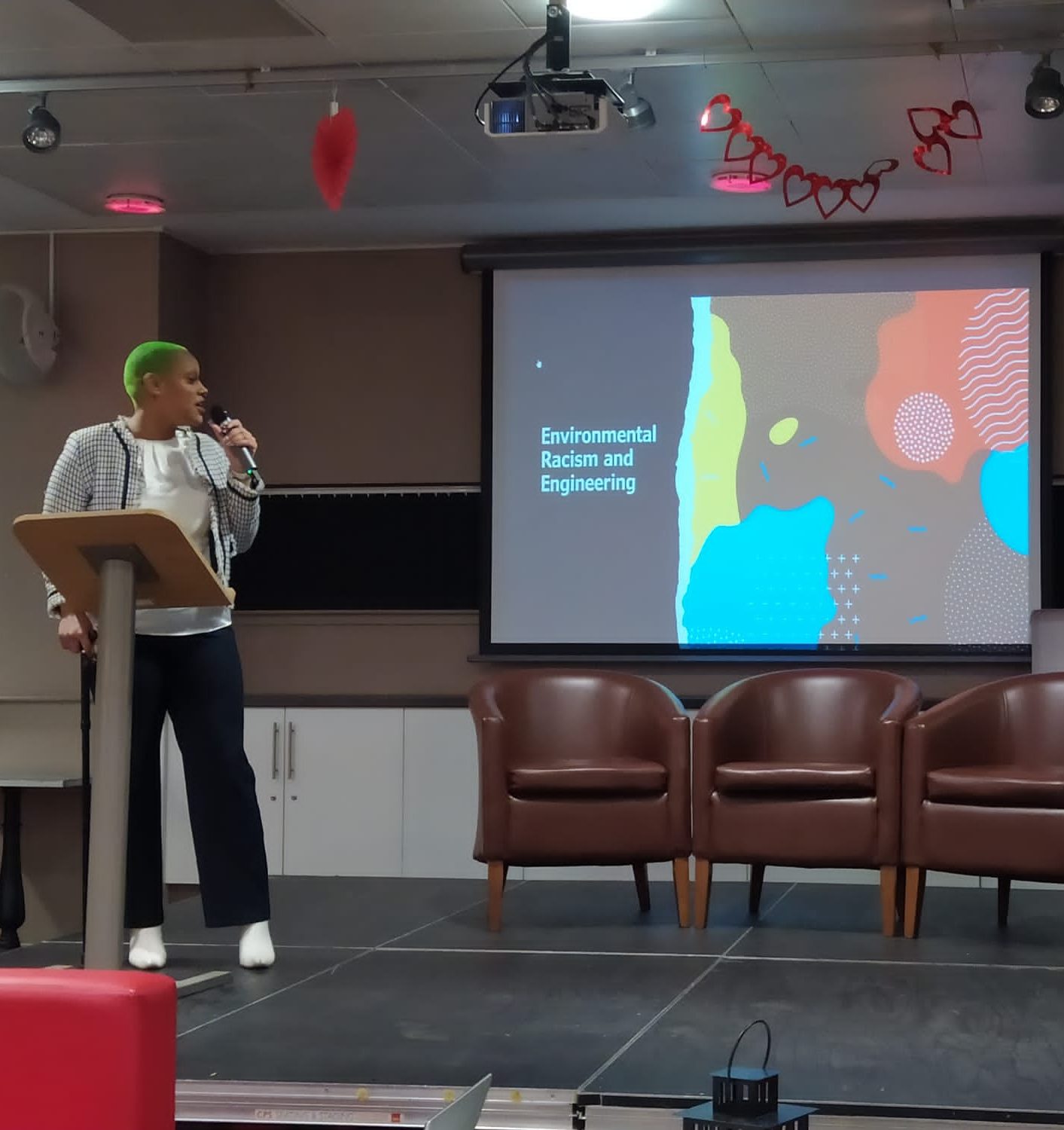
With all this, I advocate for the integration of social sciences into engineering design processes, calling for “activist engineering”, or the a philosophy and practice that redefines the role of the engineer from a passive implementer of technology to an active advocate for social justice, ecological protection, and public welfare. Prioritizing at risk minority groups and not repeating the mistakes of environmental racism is paramount, along with avoiding depleting the global south of its raw materials.
Specialization
Here are the different parts of PESTLE analysis broken down explaining how they relate to (renewable) engineering projects.

Political
Political analysis prior to implementing a (renewable) engineering project is important to economics, legality, and implementation success. If an engineering project is not politically supported, funding, permitting, and operation approval can be anything but possible. Politicians and constituents are deeply involved in lawmaking and permitting that affect engineering projects. Political attitudes in a region, if not in support of a particular engineering technology, can completely render it obsolete. In the upper east coast of the United States, offshore wind plants failed to be built when populations, angry with NIMBY (not in my backyard) sentiments, advocated and faught against the offshore wind turbines being built.

Technical
Technical analysis is what individuals are more familiar with in relation to (renewable) engineering projects. This involves the material usage, engineering design, site maintenance, decomissioning, needed infrastructure, engineering requirements/specifications, different technological components, manufacturing systems, etc. apart of the feasibility of (renewable) projects. Geological processes are of utmost important for establishing a starting point of technical design, with certain geospatial characteristics dictating technology implementation feasibility. Environmental phenomenon are translated into (renewable energy) physics values like solar flux, wellhead flow rate, wind/water current, heat flux of the earth’s core, heat flux of uranium fission, etc. These values directly correlate to the total (energy) capacity of an engineering project. Materials, which are also extracted from the natural environment are important for technical feasibility. Raw material usage should be intricately investigated for a just transition; for, mining carries a lot of social justice issues in the global south especially.

Economic
Economic analysis is one of the more popular forms of analysis on engineering projects. CapEx (capital expenditures), OpEx (operational expenditures), LCOE (levelized cost of energy), etc. are very important values to realistic implementation and operation of (renewable) engineering projects. Engineering companies have to have reasonable budgets on projects in order for them to provide their service/product at a viable market cost. In certain regions, social issue are deeply tied to economics, so to implement just and equitable engineering economics must be deeply considered. While users must be involved, they should not acquire expenses that are burdensome for equity.

Legal
Legal analysis regards all the laws and legislation, and even the lack of their presence, that impacts the implementation of a (renewable) engineering project. In the transition, laws are playing a crucial role in regulating business practices, building energy consumption, and decomissioning, as well as promoting advancing (sustainable) developments through subsidization, a pathway through land permitting, and guidelines for operation practices. When those laws and regulations don’t exist, engineers are required to perform bespoke processes to be able to permit, zone, and environmentally review (renewable energy) engineering projects. This can. greatly hinder them. Also, land usage rights and protected habitats can place restrictions on facility design and implementation. Many people supporting Indigenous people have pushed back on the usage of their sacred land, successfully nullifying the builds completely. When it comes to equity, laws can play a huge role ensuring just practices.

Social
Social analysis is the most neglected form of analysis on engineering projects. In fact, science and technology studies, where individuals investigate technology’s impact on people and vice versa is a new field of study. Different engineering projects have different impacts. For example, petrochemical plants and oil refineries sit on a 50 mile stretch from New Orleans to Baton Rogue where the population, which consists of marginalized communities, are more likely to develop cancer with two-thirds of them developing it. Renewable energy projects can directly impact grid stability & resiliency, rates of energy poverty, environmental racism, etc.

Environmental
Environmental analysis encompasses every aspect of the natural world that impacts a projects and vice versa.
Engineering
I am text block. Click edit button to change this text. Lorem ipsum dolor sit amet, consectetur adipiscing elit. Ut elit tellus, luctus nec ullamcorper mattis, pulvinar dapibus leo. Sed non mauris vitae erat consequat auctor eu in elit
Portfolio









Content Creation
Proin gravida nibh vel velit auctor aliquet. Aenean sollicitudin, lorem quis bibendum auctor, nisi elit consequat ipsum

” Proin gravida nibh vel velit auctor aliquet aenean sollicitudin, lorem quis bibendum auctor, nisi elit consequat ipsum, sagittis sem nibh id elit. Duis sed odio sit amet nibh vulputate cursus a sit amet. “
Maria Andrews
hooli.com

” Proin gravida nibh vel velit auctor aliquet aenean sollicitudin, lorem quis bibendum auctor, nisi elit consequat ipsum, sagittis sem nibh id elit. Duis sed odio sit amet nibh vulputate cursus a sit amet. “
Jane James
globex.com

” Proin gravida nibh vel velit auctor aliquet aenean sollicitudin, lorem quis bibendum auctor, nisi elit consequat ipsum, sagittis sem nibh id elit. Duis sed odio sit amet nibh vulputate cursus a sit amet. “